

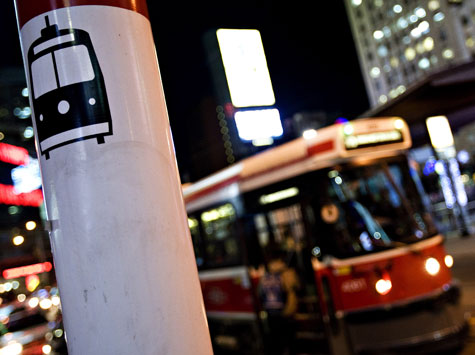
Streetcaropolis
It’s the place where pipedreams bloom and lollipops and money grow on trees, which is a good thing as nobody has a clue where dollar-one is going to be found to pay this $1.5-million tab.
That’s the annual operating cost to run the initial leg of Charlotte’s vaunted streetcar, all 1.5 miles of it, chugging from the uptown transit center near TWC Arena to Presbyterian Hospital. Charlotte officials learned this week that they landed a $25-million federal grant to help pay for the streetcar, which will cost $37 million to build. Assuming, of course, there aren’t any cost overruns. And everybody knows how that goes with rail transit in Charlotte.
So, no worries there, right. Good thing, because there isn’t any money to cover any cost overruns. As it is, the city council had to dip into a variety of slush funds to find the $12 million local match to cover construction costs, including general fund revenues that could have been used to pay for basic needs like sidewalks, roads, bike paths, and neighborhood improvements.
Those were city dollars, not half-cent sales tax for transit money, in direct contradiction to the long-held assurance that officials would never let their crazed lust for all things rail transit outpace a dedicated revenue stream that could support it.
But reality has no place in Streetcaropolis. When it became obvious that the Charlotte Area Transit System didn’t have the revenue to support an expedited timeline for building the streetcar, the city simply picked up responsibility for funding its tab – without a clue where the money would be found to do so.
There still aren’t any clues, which leaves a whopping $1.5-million annual operating cost hanging out there, just waiting for some lunatic taxing scheme to come chugging down the track – all 1.5 miles of it.
At least to start; the city’s ultimate goal is to expand the first leg and have a 10-mile streetcar route, to be built in segments, from Beatties Ford Road to the currently defunct site of Eastland Mall. Total price: $500 million.
Nobody has a clue how to pay for that, either.
As an added bonus, the first 1.5-mile leg, at a price of $37 million, is projected to have the lowest cost to build and the highest ridership of the whole streetcar line. The projected ridership, based on the numbers that use the existing bus route, is 950 trips per day. That’s trips, not passengers.
For the record, the city councilmembers who voted to pony up the $12-million local match to pursue the $25-million federal grant to build the $37-million streetcar that less than 500 people per day are projected to ride and will cost $1.5 million a year to operate with money that has yet to be found, the city councilmembers who voted for that would be Democrats Michael Barnes, Patrick Cannon, Nancy Carter, Patsy Kinsey, David Howard, James Mitchell, and former councilmember Susan Burgess. Mayor Anthony Foxx, a Democrat, didn’t cast a vote, but has been one of the project’s biggest cheerleaders.
Republican councilmembers Warren Cooksey, Andy Dulin and Edwin Peacock, along with Democrat Warren Turner, voted against pursuing the grant.
Like this story? Contribute $1.00! Click to Support PunditHouse!
Short URL: http://pundithouse.com/?p=2598

Has anyone ever gotten Warren Cooksey, Andy Dulin and Edwin Peacock on the record against BUILDING A DAMN STREETCAR, PERIOD?
Didn’t think so.
Like or Dislike:
0
0
Not a chance; they’re all for building the thing. They just want to know how badly the taxpayers will get raped before moving forward and, um, you know, raping the taxpayers.
Like or Dislike:
0
0
Has the medical marijuana been approved in Charlotte? Because I’d like to know what the elected officials are smoking!! WHAT is wrong with this group of supposed leaders?? There is NO money to fund this debacle…!! Folks, we need to contact every single one of them, everyday….maybe several times a day to let them know we don’t approve of taxpayer rape!
Like or Dislike:
0
0
If we need sexier public transportation for this “corridor” than we currently have with the several bus routes that cover that run, why not subsidize extending the Red Line of the Gold Rush trolley? That would be WAY cheaper and less disruptive to traffic. Or we can have DSS pay for cab rides along that stretch…
Like or Dislike:
0
0
Mitchell ignores the will of the citizens……
From: jamesdistrict2@aol.com
Subject: Re: Almost 2 to 1, Charlotte does NOT support a streetcar line for Charlotte
Date: July 9, 2010 10:26:59 AM EDT
To: dej57
Thank you for your opinion we are moving forward.
Thank you
Councilmember Mitchell
Sent via BlackBerry by AT&T
Like or Dislike:
0
0
Vote in the Observer’s poll on the streetcar………….
7/14/10 SUPPORT FOR STREETCAR 60/40 AGAINST (MORE)
Date: July 14, 2010 5:38:43 PM EDT
POLL
Do you support a streetcar line for Charlotte?
Yes
No
Yes
1221 40%
No
1818 60%
Total Votes: 3039
Read more: http://www.charlotteobserver.com/2010/07/13/1560648/time-to-get-aboard-these-rails.html#ixzz0th9h8ynL
Like or Dislike:
0
0
NAACP/Blacks fight against streetcar in Cincinnati/fear bus cuts
http://www.thetransportpolitic.com/2009/07/07/cincinnatis-riverfront-transit-center-attracts-criticism/
But Cincinnati is planning a major transit investment that could improve the fortunes of the neighborhood more quickly: a streetcar connecting downtown with Uptown and the University of Cincinnati, illustrated in the map above. A version of this line was the smallest element of the 2002 MetroMoves campaign. The line, which could be built for $185 million, could act as an economic generator along the route, which touches the city?s primary urban areas. The city estimates a daily ridership of 4,600. Yet hurdles remain. The local NAACP has been pushing strongly against the project, andrecently announced that it had enough signatures to force a petition on the ballot that would prevent the city from undertaking rail construction without the prior consent of the voters. The organization argues that the streetcar is a distraction from Cincinnati?s more pressing needs, including its existing bus system. If the NAACP?s referendum passes this fall, there will be little hope for the streetcar in the near future.
Like or Dislike:
0
0
Subject: Like Charlotte, citizens in Cincinnati oppose its streetcar 2-1, get FTA grant.
Poll: Most oppose streetcars
Enquirer survey shows 2-1 against $128 million project
BY BARRY M. HORSTMAN • BHORSTMAN@ENQUIRER.COM • MAY 23, 2010
http://news.cincinnati.com/article/20100523/NEWS0108/5230311/Poll-Most-oppose-streetcars
Residents of Cincinnati overwhelmingly oppose the proposed $128 million streetcar project, objecting 2-to-1 to City Hall’s plan to borrow tens of millions of dollars for a plan widely viewed as a waste of taxpayer money, an Enquirer poll shows.
The poll also found that less than one-third of Cincinnati residents expect to ride the streetcar regularly.
• Take the poll yourself.
• See full poll results
Although money for the project has solidified considerably over the past month, the poll shows that nearly half of those surveyed still question whether the proposed Downtown-to-Uptown system will ever be built.
If the streetcar line is developed, a majority of people believe most of the money to run it should come from riders, the poll found. While most public transit systems receive a relatively small fraction of their operating costs from fares – Metro’s share of about one-third, for example, is high by industry standards – the poll reveals that most people do not want the project to come at the expense of city programs or to be funded via higher taxes.
Conducted by New Jersey-based SurveyUSA, the Enquirer poll is based on telephone interviews with 600 adults who live in Cincinnati May 18-19. The poll has a margin of error of plus or minus 4.1 percentage points.
The poll offers strong evidence that even as financial and logistical planning for the streetcar advances, most Cincinnati residents have deep-rooted objections and concerns about the plan for a line stretching from Downtown’s riverfront to the area around the University of Cincinnati.
Worth The Money?
Not surprisingly, most misgivings focus on the streetcar’s price tag – specifically, with how to pay to build it and run it.
By a 61 percent to 31 percent margin, people said they disapprove of City Council’s recent approval of $64 million in bonds for the project.
Like or Dislike:
0
0
A society cannot exist without roads. They are a REQUIREMENT for both commercial and non-commercial traffic. One CANNOT fairly compare subsides to roads and subsides to rail. Rail and mass transit are options that occasionally make sense.
If we are to fulfill our destiny of life, liberty, and the pursuit of happiness, that is best done with the availability of roads. Rail, even buses, do a poor job of helping us live up to this destiny.
Mass transit should only be offered as a charity to those who need transportation but can’t afford it. Almost all these rail projects are designed to attempt to get choice riders, who can afford to pay for their transportation, our of their cars by taking from others to pay for their transportation, and that’s morally and ethically WRONG–but not in the eyes of statists.
Like or Dislike:
0
0
Subject: Should Washington be promising money for under-planned programs? (more)
Date: July 14, 2010 4:06:45 PM EDT
Fort Worth Wins Grant for Streetcar, But Whether It’s Ready Is Another Question
Yonah Freemark
July 13th, 2010 | 4 Comments
» Federal government commits to funding share for project, but the city isn’t yet ready for full investment. Should Washington be promising money for under-planned programs?
http://www.thetransportpolitic.com/2010/07/13/fort-worth-wins-grant-for-streetcar-but-whether-its-ready-is-another-question/
Last week, the U.S. Department of Transportation awarded Fort Worth $25 million to begin work on a new inner-city streetcar line, putting it in the ranks of a small group of lucky cities that received similar funds from Washington, including Charlotte, Cincinnati, and St. Louis. The grant, according to the government, will go to a 2.5-mile one-way rail loop through the center city with 20 to 25 stations, to be served by three vehicles.
The exact route has yet to be defined, because the city is in the midst of a large-scale studyof six potential corridors extending from the office district into the surrounding neighborhoods. The routes all connect to the Intermodal Transit Center east of downtown, where streetcars would meet up with Trinity Railroad Express commuter trains, Amtrak, and local buses. In order to receive the federal grant, the city is required to provide at least a 20% local match.
Fort Worth’s luck in receiving funds over a whole host of competing cities hasn’t prevented some local politicians from criticizing the project and questioning whether the city should move ahead with the line. Councilman Jungus Jordan, a long-time streetcar opponent,suggested last week that other infrastructure investments were more critical to the future of the city. The council still must approve a source of local funds — likely to be based in a form of tax-increment financing in the affected districts — to ensure the rail program’s successful implementation.
The Obama Administration is making a policy of prioritizing streetcar connections between intercity rail stations and office areas, as proven by grants to do so in Detroit, New Orleans, and Tucson. The Fort Worth line would fit well within that effort and encourage the extension of the city’s “livable,” walkable areas — now the stated end goal of the DOT in approving new transportation projects.
But the situation in Fort Worth suggests that the DOT may be putting too much trust in the potential of some local governments to move forward on planning construction projects and to establish revenue sources apart from those provided by the federal government.
Unlike the streetcar lines proposed for Charlotte and Cincinnati, which are basically ready for construction, Fort Worth’s line is under-planned. The fact that the city has yet to settle on a final alignment is problematic since it means that Washington is agreeing to finance a project that has yet to be fully defined. Is that sound policy?
Like or Dislike:
0
0
(email from Warren explaining the streetcar…)
I cannot speak for Edwin and Andy, but no, I did not write a letter of “no support.” Letters of support are formalities that accompany such applications for federal grants and are not, generally speaking, part of the analysis of the suitability of an application for funding. I suspect that the applications that failed to get funding also had such letters of support from the relevant representatives. As a matter of checking off the boxes, all that mattered was that Charlotte’s request for the grant met the federal requirements. The federal government, sadly, does not care that the City Council made the wrong decision in this matter.
Representative Myrick’s letter was typical of the support local governments ask for and usually receive from the federal representatives elected from their areas. Sue, as a former mayor, is in my opinion more sensitive than most in Congress to deferring to the decisions of local governments regarding local policy. She did change that practice somewhat last year, though, when she refused to participate in requesting earmarks. I remember that cost her much goodwill from the majority of the City Council, though I personally thanked her for her position. It’s one thing to support a local government’s request for funding from an established program and quite another to participate in the favoritism involved with earmarks.
The fact that CATS has no funding to support the streetcar was not a strike against the grant application; in fact, it was the reason for the grant application. The majority of City Council decided that if CATS couldn’t build the streetcar on its original timetable, then the City should. This is why nobody—myself included—pays much attention to any argument based on the premise that “CATS can’t afford it.” We all know CATS can’t afford to build it. Again, the federal government doesn’t care about the nuances of local government policy. It simply evaluated the application. Furthermore, the City does have the money to spend on the streetcar, albeit it can do so only by spending less money on something else. This, too, is a policy decision made by the majority of the City Council, and the fact that it is the wrong decision does not make the money go away.
This “misguided, ridiculous project,” as you correctly call it, can go forward because a majority of the City Council voted for it to go forward. Keep in mind that there are four District Council representatives who will always vote for the streetcar. The proposed route goes through Districts 2, 1, and 5, and the long-range proposal for the streetcar suggests that a line could be built into District 3. The voters in those districts will always vote for pro-streetcar candidates. From that starting point, as long as at least two of the at-large Council Members determine that there are more votes to be gained by supporting it than opposing it, then there is a majority of six to go forward. Now, if John Lassiter were mayor, I would expect him to veto the matter. Unlike Anthony Foxx, John voted consistently last year against funding further progress on the streetcar. However, that is irrelevant because 1) obviously John is not mayor, and 2) even if he were, there are actually three at-large Council Members who are pro-streetcar, and a supermajority of seven overturns a veto. In fact, so far the Council Member from District 4 has also supported the streetcar, raising the total support on Council to eight of eleven.
What I am doing to fight the streetcar is appearing in news stories to explain my opposition, and I’m planning to cast my sixth “no” vote on the subject of going forward with the streetcar when the question of accepting the funds is on an upcoming agenda. Unfortunately, few people ever sign up to speak Council meetings during streetcar-related votes to express a well-reasoned opposing opinion to which other Council Members might listen. Thus, I also expect to be outvoted for the sixth time. The people of Charlotte elected a pro-streetcar majority to the City Council, so the opportunity to stop further progress—presuming that’s what a majority of voters now wants to do—will be the 2011 elections.
Cordially,
Warren Cooksey
Charlotte City Council
District 7
Like or Dislike:
0
0
Warren provides further explanation of the situation–and seems to be happy with the lack of transparency–to the public, and to the federal government. The application implies that CATS, who successfully operates and maintains the Blue Line, will operate and maintain the streetcar, confusing and hiding what revenue streams are paying for which project. And I don’t think much of Warren’s accounting explanation–I think CATS will have to show on their books, ledger, and budget, money that comes in from the city, and likely our property taxes, and the streetcar expenses, as budget items. What about the promise that all transit would be paid out of the dedicated transit tax. What about the work to get all the local GOVCOs into the MTA, which then sets the priorities and the timetable for construction and types of corridors–isn’t city council breaking its promise to the citizens and cheating on the spirit of the MTA?
(Warren’s email)
There are no lies. CATS won’t paying for the streetcar out of its established revenues, such as the transit tax. The City will pay for it with a separate revenue stream by, in essence, hiring CATS to run the streetcar. The City will write a check to CATS for $1.5 million for the purpose of CATS operating and maintaining the streetcar. Until the line is built and the City reaches a formal operating agreement with CATS to that effect, then of course CATS will not budget for the operation and maintenance of the streetcar. CATS needs an agreement with the City to know the new revenue is coming in order to budget for it. The streetcar won’t be operational until FY12 at the earliest, so the formal discussions regarding the details will likely start next year during planning for the FY12 budget cycle.
Put another way: I can tell you and all your friends that I’m going to buy a vacation home for you in 18 months. You don’t have the money in your budget to maintain the vacation home, so if anyone asked you about it, you’d say you had not budgeted for it and will not budget for it. Even though I tell everyone I’ll take care of the expenses, you’d still say that. Until I write you a check to cover property taxes, maintenance, and utilities for the vacation home, you still wouldn’t plan to spend any money on it. However, once you have my check in your hand to deposit to your account, then you would put the home in your budget and explain to your friends how you’re paying for those items. In the meantime, I would spend those 18 months saying that you’re going to maintain the house because I plan to give you the money to do so.
I hope that analogy works. It’s the best I think I can do to explain what’s going on.
Warren
Like or Dislike:
0
0